

Your Ultimate Army Combat Fitness Test Score ACFT Calculator & Training Guide
Get instant results, understand the standards, and find resources to crush your next Army Combat Fitness Test.
ACFT Calculator
The Best Army Fitness Test Calculator to calculate your AFT score
What is ACFT Calculator?
The Army Combat Fitness Test (ACFT) was the official fitness test for all U.S. Army soldiers. It measured how well a soldier can handle the physical demands of military duties.
Here’s what it includes:
- Six events: deadlift, standing power throw, hand-release push-ups, sprint-drag-carry, leg tuck (or plank), and a two-mile run.
- Each event tests different skills like strength, power, speed, and endurance.
- Every event is scored from 0 to 100 points, for a maximum total of 600 points.
- Soldiers must meet the minimum passing score in each event and a total combined score to pass.
The ACFT replaced the older Army Physical Fitness Test (APFT) to provide a more complete picture of a soldier’s overall fitness.
ACFT Calculator is Now AFT Calculator
Starting June 1st, 2025 the Army Combat Fitness Test (ACFT) has been rebranded to the Army Fitness Test (AFT). This means that we got a new name for US Army Fitness Test.
Not only the name has been changed but some changes has been made in how US army will measure your Fitness Level.
The 6 ACFT Events Vs. The 5 New AFT Events
Maximum Deadlift (MDL)
Measures absolute strength and assesses a soldier’s ability to safely lift and move heavy loads from the ground.
Hand Release Push-Up (HRP)
Evaluates upper body endurance and core strength, critical for pushing away from obstacles or opponents.
Sprint-Drag-Carry (SDC)
A high-intensity test of agility, muscular endurance, and anaerobic power, simulating critical combat tasks.
Plank (PLK)
Assesses core stability and strength, which is fundamental for injury prevention and maintaining posture under load.
Two-Mile Run (2MR)
The final event, testing aerobic endurance and the mental fortitude to keep going when fatigued.
Understanding Your New AFT Scores: Why Your AFT Score Matters?
Understanding your AFT score is key, it shows how well you meet Army fitness expectations, affects your promotions, determines MOS eligibility, and reflects your readiness to lead.
Previously, the Army Combat Fitness Test (ACFT) was scored out of 600 points, with soldiers categorized by physical demand levels: Heavy (Black), Significant (Gray), and Moderate (Gold). The minimum passing scores ranged from 360 to 440 points, depending on category.
With the new Army Fitness Test (AFT), the maximum score is now 500 points instead of 600. To pass, non-combat soldiers must score at least 300 points, while those in combat MOS need a minimum of 350 points.
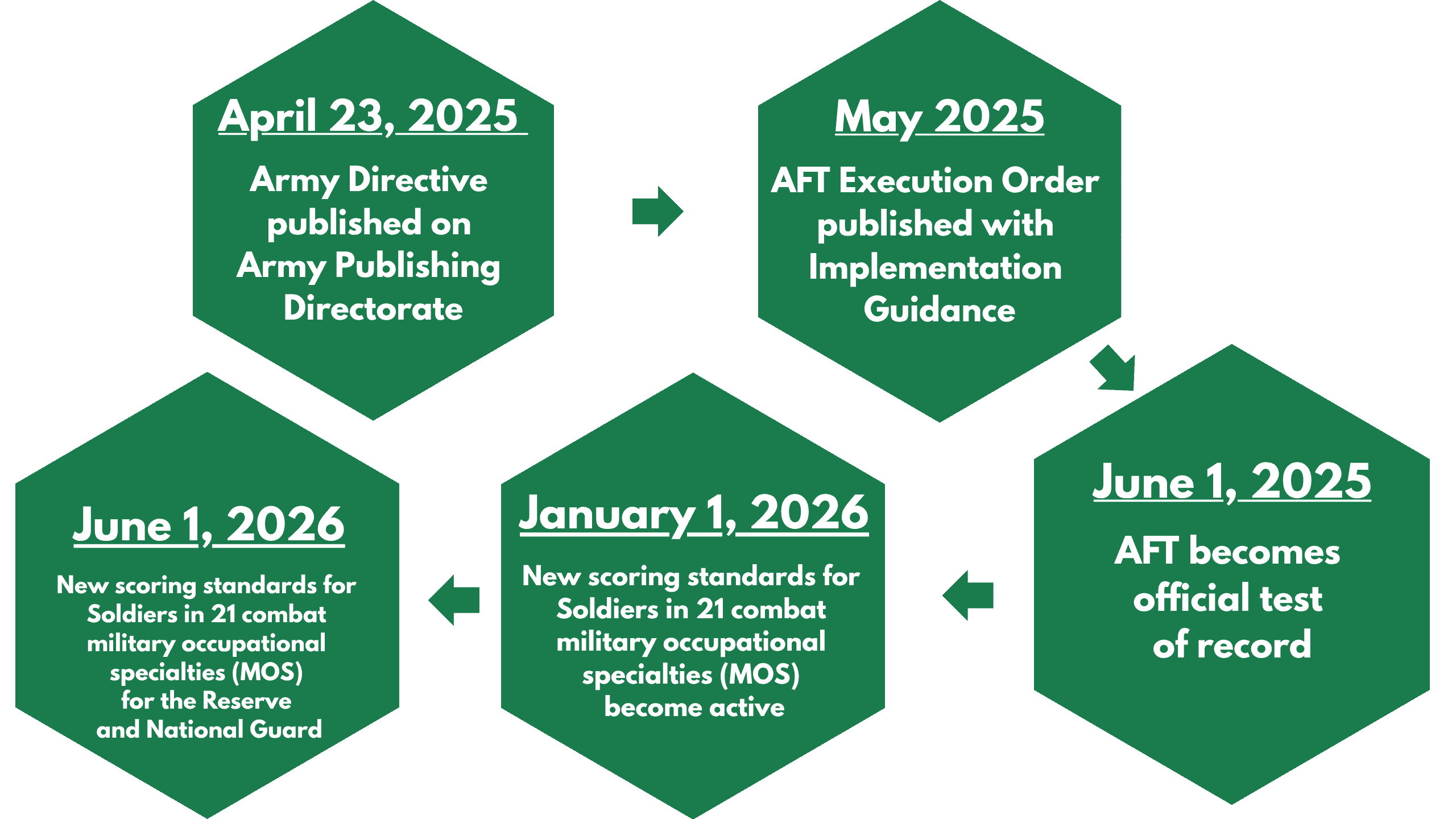
Starting January 1, 2026, these higher combat standards will officially take effect for Active Duty soldiers, followed by the Reserve and National Guard on June 1, 2026. The new AFT uses five events instead of six, removes the Standing Power Throw, and applies gender-neutral standards for 21 combat MOS roles.
NEW AFT Events Breakdown
The ACFT (that replaced Army Physical Fitness Test, APFT) consisted of six events; deadlift, standing power throw, hand-release push-ups, sprint-drag-carry, leg tuck (or plank), and a two-mile run.
In the New AFT, the standing power throw has been remove totally. While soldiers are allowed to take alternate events for 2 mile run. These include a 5,000-meter row, a 15,000-meter stationary bike, or a 1,000-meter swim
These Tests are assessed on Go/No-Go Basis and not the actual points basis. While other events, are the same as the previous ACFT.
The new scoring system also follows a sex-neutral, age-based standards with a total passing score of 300 or more and at least 60 points in each event. While Combat soldiers required 350 points.
These AFT results are also integrated into the Digital Training Management System (DTMS) for automated tracking, focusing on readiness and standardization across units.

Maximum Deadlift (MDL)
Overview: This event measures lower-body and core strength, helping Soldiers safely perform heavy lifting tasks and reduce injury risk.
How It’s Done: Perform three controlled lifts using maximum weight while maintaining proper form and balance.
What You Need: Standard 60-pound hex bar with weight plates.
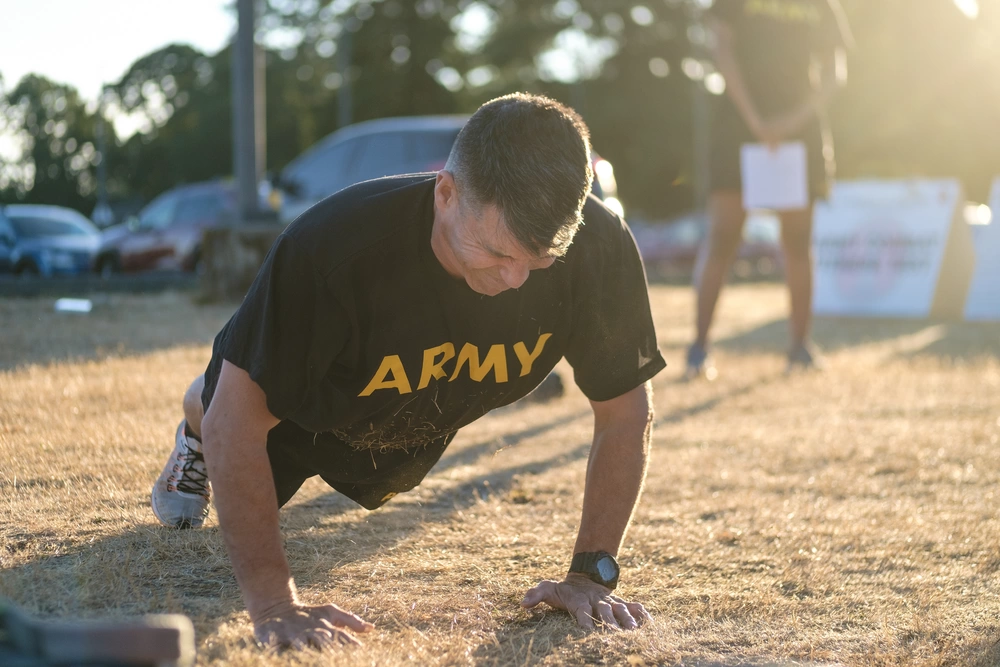
Hand-Release Push-Up (HRP)
Overview: This movement builds upper-body endurance and stability, key for pushing, pulling, and other combat-related actions.
How It’s Done: From the ground, push up as one unit, lower your body, release your hands outward, then return to start for each rep.
What You Need: Flat, level surface such as a mat or gym floor.
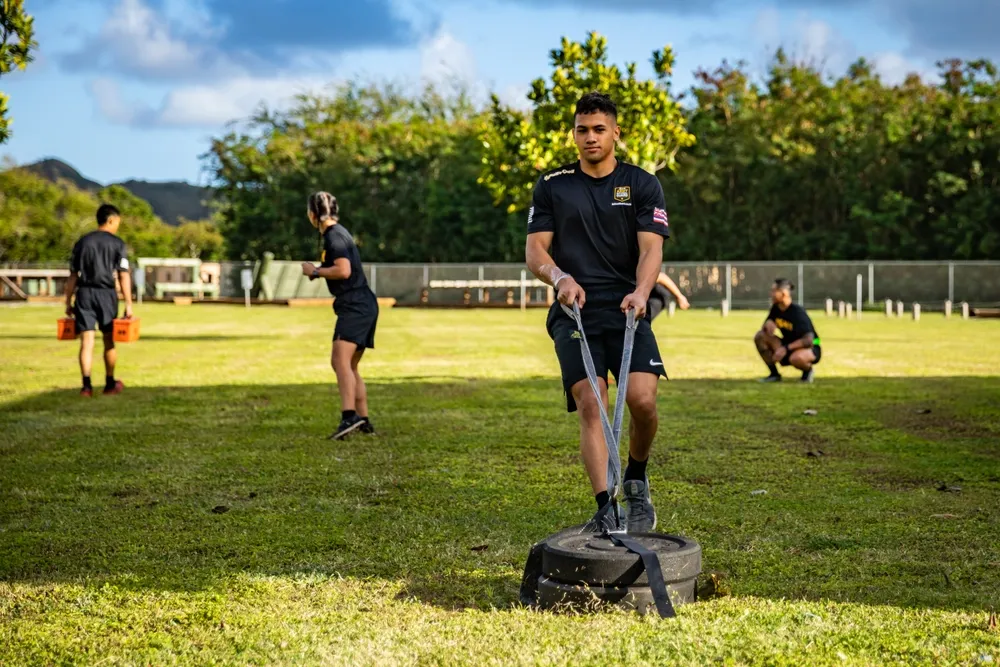
Sprint-Drag-Carry (SDC)
Overview: This test challenges speed, power, and coordination through a mix of sprinting, dragging, and carrying movements.
How It’s Done: Sprint, drag a sled, move laterally, carry kettlebells, and finish with one final sprint—covering five 25-meter lengths.
What You Need: Two 40-pound kettlebells, one weighted sled, and a 25-meter lane.
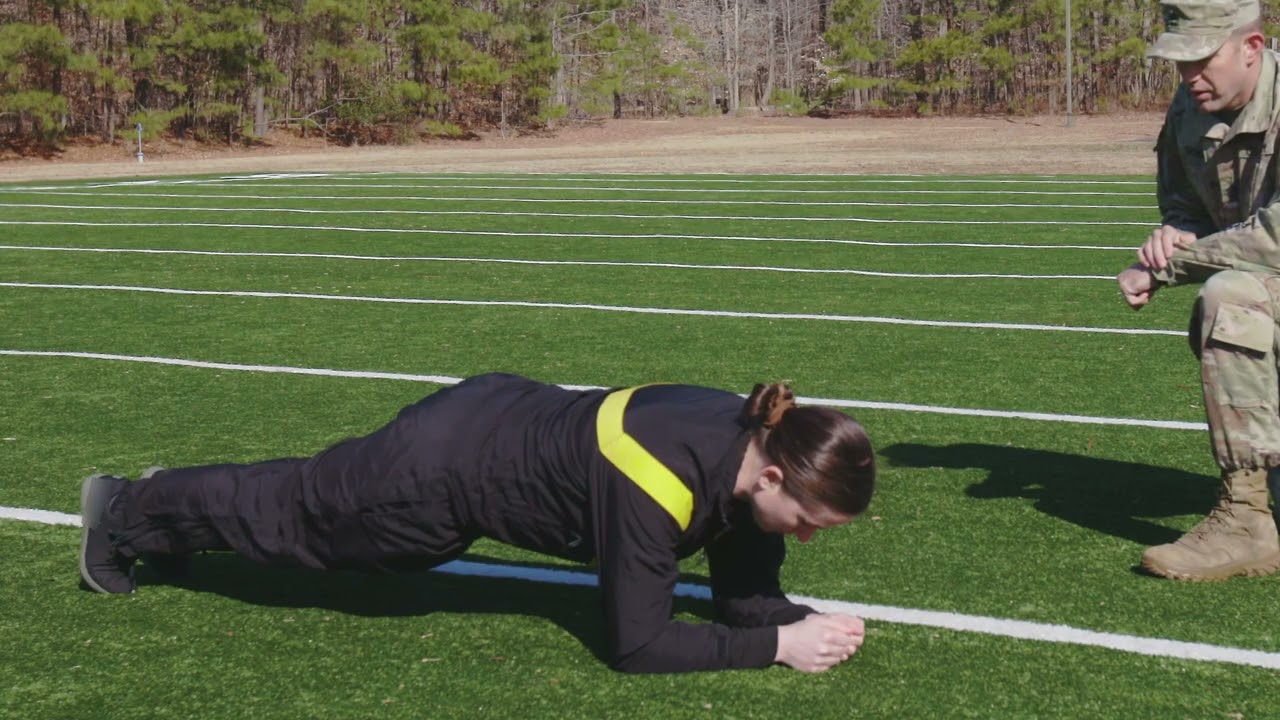
Plank Hold (PLK)
Overview: The plank builds core endurance and stability, essential for balance, posture, and overall movement efficiency.
How It’s Done: Maintain a straight-line position from head to heels, supported on forearms and toes, for as long as possible.
What You Need: Flat, non-slip surface such as a mat or gym floor.
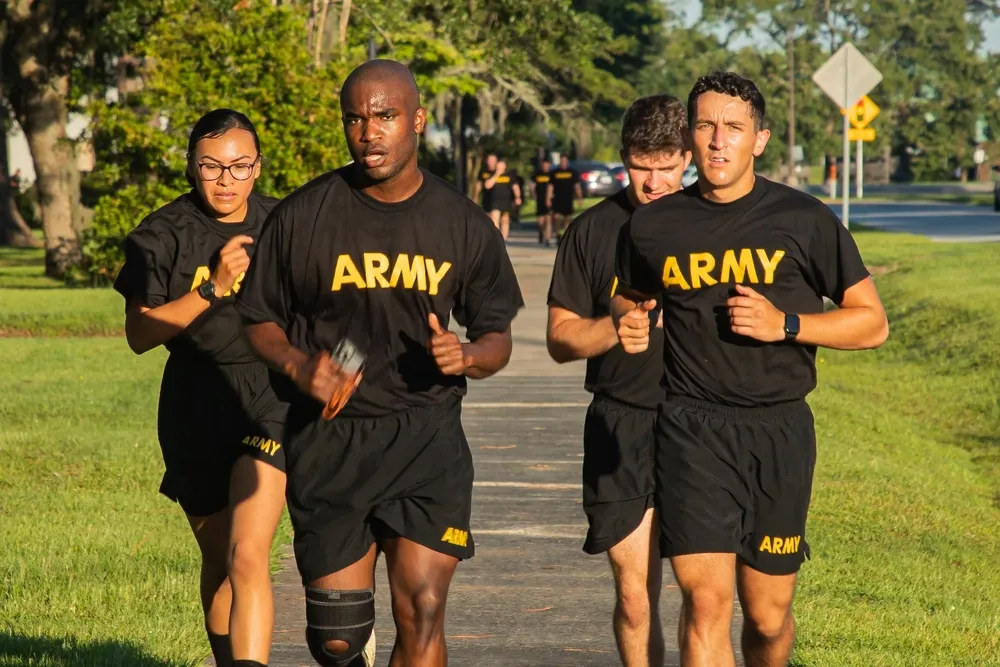
Two-Mile Run (2MR)
Overview: This event tests cardiovascular endurance and the ability to maintain effort over a sustained distance.
How It’s Done: Run two miles at your best pace—walking is allowed but continuous motion is recommended.
What You Need: Marked two-mile course on track or road.
Frequently Asked Questions
What exactly is the Army Fitness Test (AFT)?
The AFT is the modern physical evaluation standard for the U.S. Army, which is set to take the place of the Army Combat Fitness Test (ACFT). It was developed to better gauge a soldier’s readiness for combat scenarios, help lower injury rates, and cultivate a more physically capable military force.
What distinguishes the new AFT from the old ACFT?
The AFT introduces several key modifications from the ACFT. The most significant change is the reduction from six events to five with the removal of the Standing Power Throw. It also establishes new sex-neutral physical standards for 21 combat-oriented Military Occupational Specialties (MOS) and requires a higher minimum total score of 350 for those roles.
When will the AFT become the official fitness test for the Army?
The AFT is scheduled to become the Army’s official test of record for all components; Active Duty, Reserve, and National Guard; starting on June 1, 2025.
How is the AFT scored?
Scoring operates on a two-tiered system. For soldiers in designated combat roles, the standards are neutral to gender but adjusted for age. For all other soldiers, scores are normed based on both age and gender. A minimum of 60 points is required in each of the five events, with a maximum possible total score of 500.
What score do I need to pass the AFT?
A passing evaluation requires a soldier to earn at least 60 points in every single event. For those in non-combat positions, the total score must be 300 or higher. Soldiers in combat MOS roles must meet a more demanding standard, requiring a total score of at least 350 points (70 points per event).
What happens if a soldier in a combat MOS doesn’t achieve the 350-point minimum?
If a soldier in a combat-designated MOS is unable to score the required 350 points after their second attempt, they risk being reclassified into a different job, depending on the Army’s needs at that moment.
What happens if I fail the AFT?
Failing a record AFT will result in the Army providing dedicated support and training to help you improve. You will be given an opportunity to retake the test. However, failing two consecutive record-score AFTs could lead to proceedings for involuntary separation from service.
How often will soldiers be required to take the AFT?
The testing frequency depends on the soldier’s component. Active Duty personnel are required to take the test twice a year (semi-annually), while Army Reserve and National Guard soldiers must complete it once per year (annually).
Can I retake the AFT if I’m not happy with my score?
The information primarily focuses on retaking the test after a failure. Generally, policies allow for soldiers to retake diagnostic tests to track progress, but an official “for-record” test score typically stands until the next required test, unless you have failed.
What is ACFT Calculator?
ACFT calculator is a tool that help you calculate your army combat fitness test score. You take your measurements and provide those to the acft calculator and it will give your score along with its caliberation.
What is the Difference between the ACFT Calculator Vs. AFT Calculator?
Our website ACFTcalculator.io initally had ACFT calculator, but after US army modified the requirements, we’ve revamped the tool and now we have AFT calculator as per the new guidelines.
Does the AFT Calculator include the alternate events?
Yes, our comprehensive AFT calculator includes the scoring standards for the alternate aerobic events (5,000m row, 15,000m bike, 1,000m swim) for soldiers on a permanent medical profile who are unable to complete the two-mile run.
How long does it take to complete an AFT?
The entire test, including the specified rest periods between each of the five events, is designed to be completed in approximately 70 minutes or less.